
SSB
PPDT at the SSB: How to Write, Narrate and Discuss Your Story on Day 1
PPDT decides who stays after Day 1 of the SSB. How the timing works, a simple way to structure your story, the mistakes that get people screened out, and how to handle the narration and discussion.
DefenceRoger Editorial · 19 July 2026 · 4 min read
On this page
On Day 1 of the SSB, the Picture Perception and Discussion Test (PPDT) does most of the sorting. Often more than half the batch goes home that evening. It isn't an English test or a creativity test. The assessors want to see how you read a vague situation, whether your thinking is practical and positive, and how you behave in a group of strangers who all want to be heard.
30 seconds, 1 minute, 4 minutes
- 30 seconds to look: a hazy black-and-white picture is shown. Take in the setting first, then the people and what they seem to be doing.
- 1 minute to note: in the box on your sheet, mark where each character is, with sex (M, F, or P if you can't tell), approximate age and mood (+, - or 0). Circle the main character.
- 4 minutes to write: a story of roughly 80 to 100 words built on what you saw.
A simple structure for the story
Don't spend your four minutes describing the picture. Write what led to the scene, what the main character does about it, and how it ends. The middle part matters most.
- What led to this (about 2 lines): who your main character is, with a believable age and background, such as a 20-year-old college student or an NCC cadet, and why they are there.
- What they do (4 to 5 lines): how they understand the problem, who they involve, what resources they use, whom they inform. Show the steps, not just the result.
- How it ends (1 to 2 lines): a practical outcome. Avoid ending in failure, and avoid magic or film-style heroics.
The assessor isn't grading your fiction. They are reading how your mind deals with a problem when nobody tells you what the problem is.
Mistakes that get people screened out
Most bad stories come from one of these four habits. Your story should come from the picture in front of you, not from a story you prepared at home.
- Memorised stories: forcing a ready-made story about organic farming or a literacy camp onto a picture that shows something else. It tells the assessor you weren't really looking.
- Superhero endings: a college student overpowering armed terrorists alone, or someone winning a lottery. It isn't practical.
- Inventing tragedy: adding bomb blasts, accidents or robberies to a calm picture of people sitting around a table.
- One-man shows: the hero does everything while everyone else stands and watches. Officers work through people.
Your one-minute narration
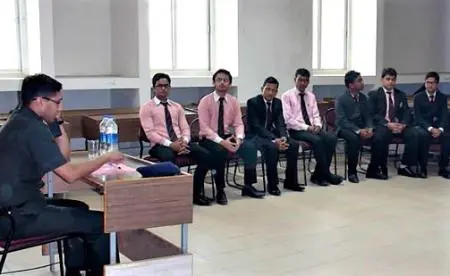
Each candidate narrates their story to the group for one minute. A good story narrated in a weak, hesitant voice loses a lot of its value, so practise this out loud before you go.
- Talk to the group sitting with you, not to the assessors. You are telling the story to them.
- Open with the basics and move on: 'Good morning, friends. I saw three characters. My main character is a 21-year-old man in a positive mood. My story is...' Then get to the action.
- If you stumble or forget a line, don't apologise and don't stop. Sit straight, keep your voice up and carry on with different words.
The group discussion
After the narrations, the group has to settle on one common story. It is usually loud. The assessors are looking at whether you can make yourself heard, put forward a sensible idea, give way when the group goes another direction, and help the group finish.
- Start if you see an opening. If most stories had something in common, say so and propose it: 'Most of us saw a village setting. Shall we take that as the base?' Giving the group a direction early helps it, and it gets you noticed.
- Don't try to shout over three people. The noise always drops for a moment every 15 or 20 seconds. Come in then, calmly, with a clear point.
- Let go of your own story if the group prefers another. Arguing for your version till the end counts against you.
- If someone has been quiet all along, bring them in: 'Chest number 7 hasn't spoken yet, let's hear him.' It shows you are thinking about the group, not only about yourself.
The best preparation is practice with other people. Take a few pictures, set a timer, write, narrate to friends and argue it out. Ten rounds of that will teach you more than reading another article, including this one.